A Guide to Verified Timesheets for Frontline Teams
A guide to verified timesheets for UK frontline teams: capture evidence of worked hours, resolve disputes faster and strengthen payroll control daily.
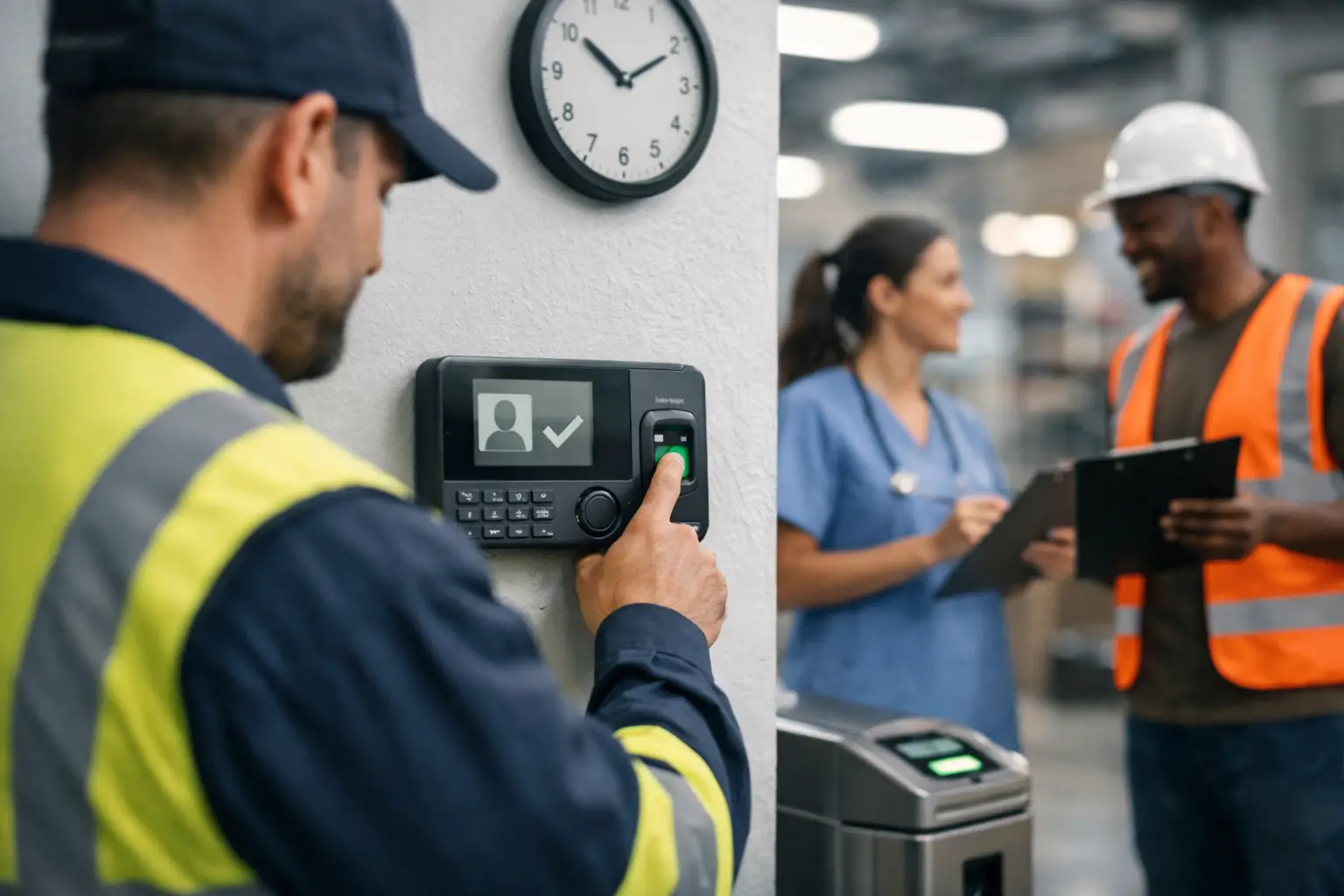
A disputed shift is rarely just a payroll problem. It can expose weak site controls, consume managers’ time, frustrate workers and leave finance unable to distinguish a genuine exception from an unsupported claim. This guide to verified timesheets explains how frontline organisations can create a clearer record of hours worked, where the evidence comes from and how it can support payroll, safety and operational decisions.
A verified timesheet is not simply a digital form with an employee’s name against it. It is a record of working time supported by evidence that a worker was present at an authorised place, at a relevant time, and, where appropriate, completed the activity being paid for. The right level of verification depends on the role. A warehouse operative on a controlled site needs a different method from a mobile engineer travelling between customer locations.
Why ordinary timesheets create avoidable risk
Paper timesheets and self-declared mobile entries rely heavily on memory, trust and manager availability. They can be appropriate for some professional roles, but they become difficult to control across shifts, sites and large mobile workforces. By the time a discrepancy appears, the manager may be off shift, the worker may have moved location and there may be no reliable record to check.
The result is familiar: late approvals, manual spreadsheet corrections, arguments over early arrivals or missed clock-outs, and payroll teams chasing evidence after the pay run has already been prepared. For service-led businesses, there is another exposure. A customer may challenge whether a visit, clean, inspection or delivery took place, while the organisation only has a manually submitted record.
Verified timesheets reduce ambiguity by separating a declared time from a supported event. That does not mean treating every worker as a compliance issue. It means designing a fair, proportionate process that can recognise real exceptions while making the normal path easier to validate.
What makes a timesheet verified?
A timesheet becomes verified when its hours are matched against evidence collected at the point of work. The evidence should be relevant to the job, difficult to alter retrospectively and understandable to the people responsible for approving it.
For fixed-site teams, this may begin with a physical clock-in event using a badge, clock or wearable. For mobile teams, it may include location intelligence that establishes a worker’s arrival and departure at an approved work location. In higher-control environments, task events can add further context, such as a completed check, a scan at a defined point or a supervisor-approved exception.
Useful evidence can include:
- a badge or clock event at a site entrance, work area or designated clocking point;
- indoor or outdoor location evidence matched to an assigned workplace or visit;
- timestamps from an authorised device, tag, gateway, sensor or wearable;
- a task, safety or workflow event that corroborates the work performed.
No single signal is automatically right for every organisation. A clock event can prove a worker interacted with a device, but it may not tell you whether they entered the work zone. Location data can establish presence within an agreed boundary, but it must be configured carefully around large or complex sites. The strongest design uses the least intrusive evidence that can answer the operational question.
Attendance evidence is not performance judgement
Presence, hours and task completion are related but distinct facts. Someone may arrive at a site, yet need a manager to confirm whether they worked an overtime shift. Equally, a task record may show an activity happened without establishing the full duration of a shift.
This distinction matters. Verified time and attendance should give managers a credible starting point for approval, not remove judgement from legitimate cases such as a broken clock, emergency response, changed assignment or agreed travel time. A good process flags exceptions for review rather than silently converting imperfect data into a payroll decision.
How to build a verified timesheet process
Start with the decisions you need to make, rather than with the technology. Ask which hours are regularly disputed, where time is currently captured and who has to intervene. A facilities team may need proof that scheduled staff attended each client site. A manufacturing operation may need to distinguish time on site from time assigned to a specific production area. A logistics employer may need a reliable record across depot, yard and delivery activity.
Then define the event that counts as the start and end of paid time. This is a policy decision as much as a technical one. It may be entry through a clocking point, arrival within an approved site boundary, a scheduled task check-in, or a combination. Document how breaks, training, travel, overtime and missed punches are handled before configuring rules.
Next, connect the evidence to the schedule. A verified system should compare actual events with planned shifts, roles and locations. If a worker clocks in early, the system can record the event without assuming all early time is payable. If someone appears at the wrong site, the manager can see an exception before payroll is finalised. This is where verification becomes operational control rather than a passive audit trail.
Finally, build an approval route for exceptions. Managers need a concise view of what happened, the available evidence and the reason for any adjustment. Payroll needs a final approved record, not a stream of unreviewed raw events. Clear ownership prevents the common failure mode in which payroll becomes the default investigator for every missed clock-out.
Choosing the right technology for the environment
Software-only time recording can work where workers have reliable personal devices, work in predictable locations and the risk of disputed hours is low. It is quicker to introduce, but it may provide limited evidence in areas with poor connectivity, shared devices or inconsistent adoption.
Hardware-backed verification is often more suitable for frontline settings. Purpose-built badges, clocks, gateways, tags, sensors and wearables can capture physical-world events at the location where work happens. This is particularly useful across warehouses, manufacturing sites, hospitals, retail estates and multi-site service operations, where the distinction between being scheduled, being present and being in the required area matters.
Indoor and outdoor location should also be assessed separately. GPS can be useful for field and mobile work, but is less suited to detailed indoor positioning. Indoor location intelligence can provide a better picture in large facilities, provided the infrastructure and site design support it. The objective is not continuous observation. It is evidence appropriate to attendance, safety and workflow decisions.
Sense Workplace applies this approach through its Presence platform, connecting attendance and timesheets with indoor and outdoor location intelligence and proprietary workplace hardware. It can sit alongside existing HR, payroll and operational systems through integrations and an open API, so organisations do not necessarily need to replace their wider stack to improve the evidence behind paid hours.
Connect verified hours to payroll, safety and service delivery
The commercial value of verified timesheets comes from what happens after capture. Approved hours can be passed to payroll systems with fewer manual interventions. Managers can resolve discrepancies while the shift context is still fresh. Finance can distinguish an authorised adjustment from an unexplained variance.
The same physical-world data can also support wider frontline workflows. A current view of who is present can assist emergency roll-call. Location-aware rules can help identify a lone worker who may need attention, depending on the organisation’s risk assessment and configured safety process. Task validation can help operations teams investigate whether planned work was completed at the right place and time.
These uses need clear boundaries. Payroll verification should not become a vague programme of monitoring. Define each purpose, limit access to people who need it and avoid collecting more data than the process requires. The UK Information Commissioner’s Office expects organisations to be transparent about worker monitoring and to consider necessity, proportionality and data protection impacts. Workers should understand what is collected, why it is used, how long it is retained and how they can challenge an error.
For working-time records and pay, organisations should also ensure their arrangements reflect their own contractual terms and applicable UK employment requirements. Technology can create better evidence, but it does not decide whether a payment is contractually due.
Use AI to handle routine exceptions, not replace accountability
Once verified events and schedules are connected, specialist AI agents can assist with defined workforce tasks. For example, an agent may identify a missing clock-out, gather the relevant shift and event history, route the case to the right manager and prepare the information needed for review. This reduces repetitive administration without allowing an automated system to make unexplained pay decisions.
The design principle is simple: automate the gathering, matching and routing of evidence; retain accountable human approval for exceptions that affect pay, safety or employment outcomes. This is particularly valuable where managers oversee many sites and cannot spend each morning reconciling raw attendance data.
FAQ: Guide to verified timesheets
Do verified timesheets eliminate payroll disputes?
No. They make disputes faster to investigate because there is a time-stamped record to review. Genuine exceptions will still occur, so workers and managers need a straightforward correction and approval process.
Can verified timesheets work for mobile workers?
Yes. Mobile teams can use approved location-based arrival and departure evidence, supported by shift schedules and task events where relevant. The method should reflect the job, device availability and the privacy impact of collecting location data.
Is a biometric clock required?
No. Organisations can verify attendance through badges, clocks, location intelligence, work devices or workflow events. The appropriate method depends on the site, workforce and the evidence required. Biometric processing requires particular care because of its privacy implications.
What should happen when a worker misses a clock-in?
The system should flag the exception, retain the available evidence and route it to the appropriate manager for review. A worker should be able to provide context, and any adjustment should be recorded rather than overwritten without explanation.
Can verified timesheets integrate with existing payroll software?
Often, yes. The key requirement is a controlled flow of approved hours and pay codes into the payroll process, with clear handling for corrections and audit records. Review integration options, data ownership and approval points before implementation.
Better timesheet control starts by asking a practical question: what evidence would let a manager make the right decision before payroll closes? Build the process around that answer, and verified hours can become a useful operating record rather than another administrative burden.



