Healthcare
Healthcare providers struggle to show what's happening on their front lines
We have worked with healthcare operators across care homes, hospitals, community care and nursing teams, as well as clinics, GP surgeries and more. But despite shifts and care plans being carefully organised, most providers say they still struggle with the following challenges:
- Matching planned care hours with time delivered
- Filling rota gaps at short notice
- Protecting lone workers on home visits
- Proving patients received the right attention
- Responding fast to incidents or urgent care needs
- Giving managers visibility of homes, wards, visits and sites
Healthcare is under constant pressure, with patient demand and staff availability both changing at short notice. Even small operational delays can affect the quality of care, staff wellbeing, family confidence, and stretched budgets.

Care delivery is a complex balancing act of fighting fires
Healthcare teams are stretched to bursting with staffing shortages, budget constraints, and a constant demand from patients and their loved ones. And each setting has its own pressures.
A care home must manage residents with different levels of dependency, regulatory requirements, and family expectations – often needing to tap into agency banks to plug short-term staffing gaps. A community care provider may be coordinating visits across a wide geographic area, with some teams even dealing with dangerous or unstable patients, often alone. And hospitals, clinics or surgeries face their own pressures around admissions, discharges, patient flow, bed availability, and staff training and retention.
Without a detailed understanding of where people are and what is happening, the constant, complex flow of activity makes it very difficult to do anything other than fight fires. This leads to higher costs, staff burnout, compliance failures, and difficult conversations with families, regulators and commissioners.
Higher Costs
- Agency Reliance. When rota or coverage gaps are noticed too late, providers must rely on expensive agency cover.
- Budget Overspend. When planned care hours do not match actual hours worked, costs exceed their budgets.
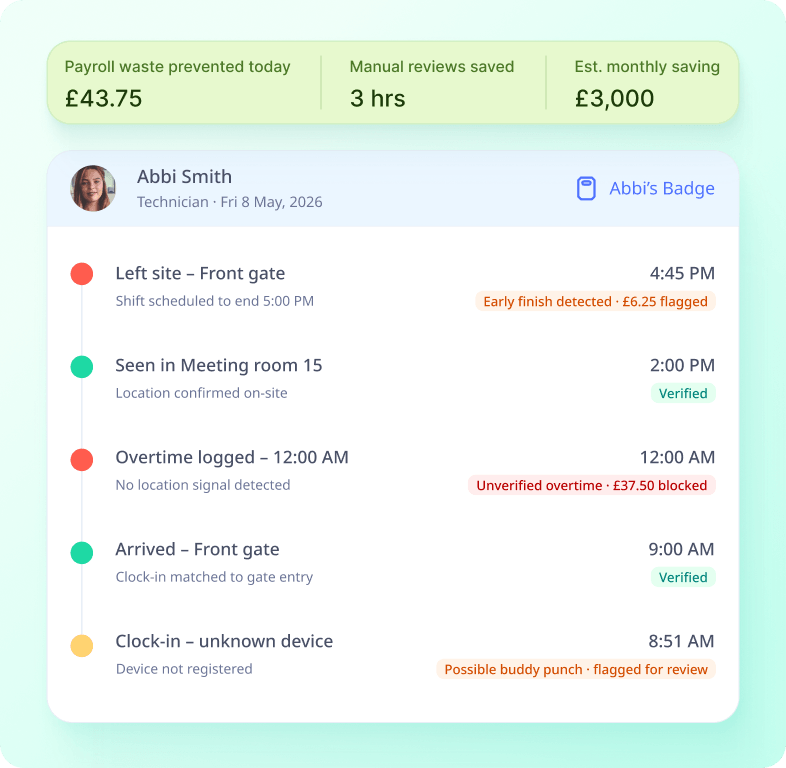
- Payroll Waste. Attendance, overtime, travel time and other hours worked are often guessed and over-estimated.
Staff Wellbeing
- Lone Worker Risk. Community care workers, nurses, or night staff need to know they are protected against danger.
- Unfair Pressure. Staff may feel blamed for problems caused by issues outside of their control, such as short staffing.
- Burnout. Staff who take on extra shifts or responsibilities to cover gaps or emergencies may suffer in the long run.
Quality of Care
- Lack of Evidence. It is difficult for healthcare providers to prove that patients received the attention they needed.
- Missed or Delayed Visits. Overworked staff may be physically unable to cover all visits, leaving patients neglected.
- Poorer Outcomes. If urgent issues are not attended to fast enough, service delivery and patient outcomes suffer.
What successful healthcare providers do differently
It is not sustainable to add more manual checks, increase supervisor visits, or rely more heavily on overtime or agency staff. The most successful healthcare providers we have talked to are equipping their frontline teams, supervisors, coordinators and senior managers with better real-time data from the point of care.
This helps them quickly see things like:
- Who is working at each site right now
- Which teams, locations or patients need extra support
- Who is nearby and able to respond to an urgent need
- Which patients or residents have received scheduled attention
- How long staff spent at each bed, room, or patient home
- If lone workers are at their expected destinations
- Whether planned care hours match actual time delivered
- Whether timesheets match actual time worked
- Why certain sites, teams, or shifts perform differently
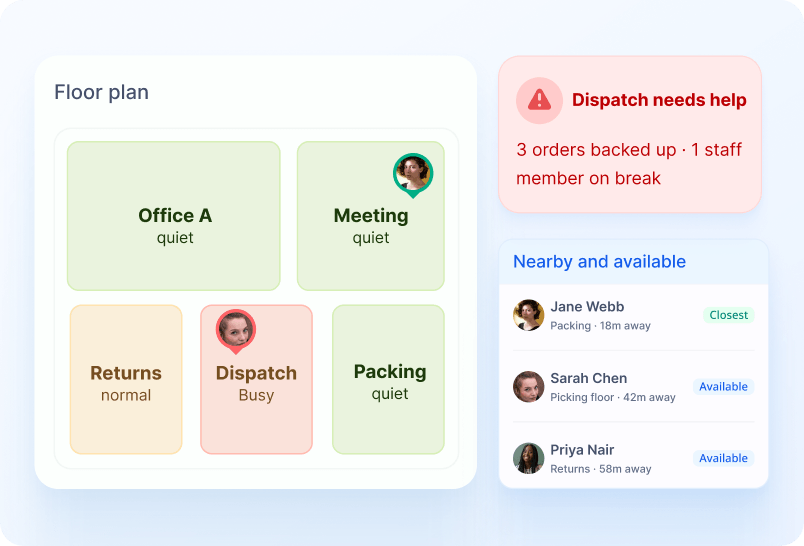
When you can quickly answer questions like this, your supervisors can support safer shifts, your coordinators can respond faster, and senior teams can make focused improvements to protect care quality, staff wellbeing, compliance, and operational performance.