Logistics
Logistics teams struggle to show what's happening out on the road
We have worked with logistics operators across transport fleets, depots, warehouses, delivery teams, field-teams, and multi-site distribution networks. But even when routes, shifts and schedules are very carefully planned, most operators still struggle to do things like:
- Show managers what's happening at depots and customer sites
- Verify hours claimed against actual hours worked
- Protect lone drivers and out-of-hours workers
- Respond quickly to delays, incidents or urgent jobs
- Cover drivers or warehouse gaps at short notice
- Prove deliveries or site visits happened as expected
Logistics is a high-pressure industry where margins are tight, service levels are heavily monitored, and significant disruption is expected daily.

The only industry where disruption is normal
Logistics companies must contend with dozens of disruptions outside of their control. As well as the usual employment issues such as absence and staff turnover, they are frequently hit with complications including heavy traffic, site access issues and vehicle problems.
This means that even when your teams arrive on time, follow the route plan, complete their drops and keep customers updated, operations can change so quickly that managers do not always know what has happened until it has got out of hand.
Logistics teams tend to have tracking technology embedded into their fleets, deliveries, and moving parts. But they still find themselves organising their teams via phone calls, text messages and spreadsheets, which leads to higher costs, service failures, and a workforce that feels constantly under pressure.
Higher Costs
- Failed Deliveries. When deadlines are missed, schedules get clogged with re-deliveries and customers expect compensation.
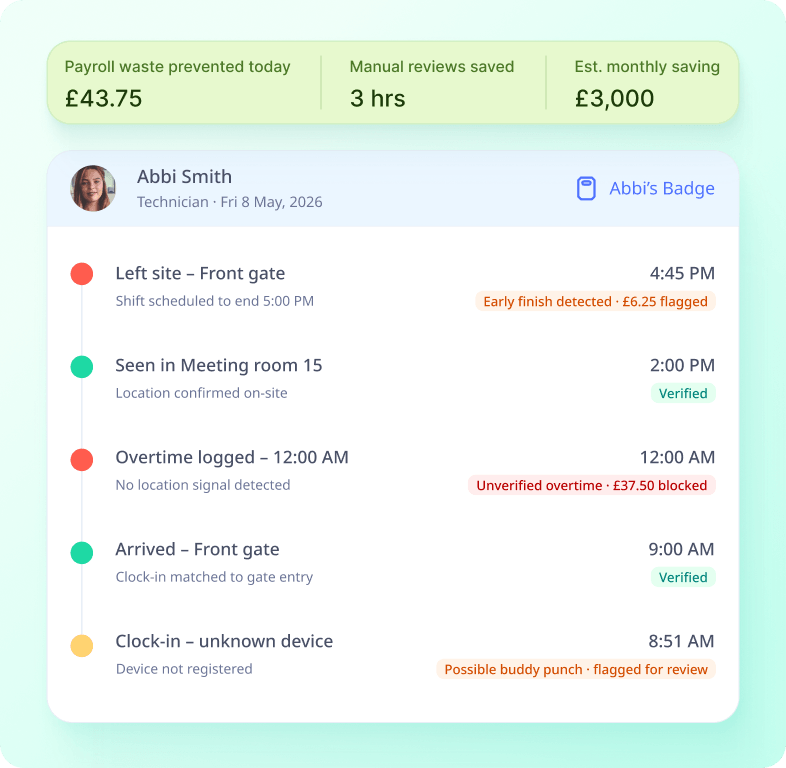
- Payroll Waste. When travel time, overtime, wait time and regular hours are not recorded correctly, labour costs creep up.
- Inefficient Deployment. Managers who cannot see who is available or delayed make inefficient deployments across routes and depots.
Staff Pressure
- Unfair Blame. Drivers, warehouse staff and supervisors may take the blame for delays caused by traffic, site access or poor handovers.
- Safety Issues. Lone drivers, out of hours workers or staff attending client sites may feel unprotected or vulnerable.
- Admin Burden. Too many team members are tied up chasing updates, investigating issues and manually processing reports.
Customer Service
- Inconsistent Evidence. Proving that a delivery or collection was complete is difficult without a standardised process.
- Slow Recovery. When incidents, delays or customer escalations occur, managers need to see who is able to respond.
- Poor Service Delivery. Customers get upset without reliable updates, accurate ETAs and consistent delivery performance.
What successful logistics operators do differently
When things go wrong, successful logistics operators already know where everybody is, what each person's status is, and who is available to help.
Rather than flapping around with phone calls, calling in emergency overtime, or asking planners to chase for updates, the most successful logistics operators are equipping their teams, depot managers and transport planners with technology that helps them quickly see things like:
- Where each driver, warehouse worker or office worker is right now
- Who is nearby and able to take on an urgent job
- Which deliveries, collections or site visits have happened
- How long staff spend loading, waiting, travelling or completing tasks
- When lone workers were last confirmed as safe
- How actual hours compare with planned hours
- Whether timesheets match actual activity
- Which depots, routes, or teams perform best (and why)
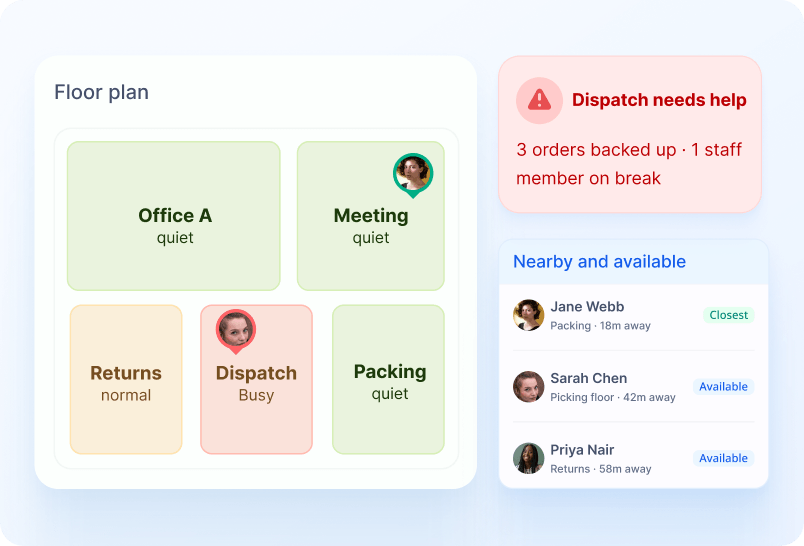
If you can answer these sorts of questions quickly, your planners can respond faster to emergencies, your depot managers can run more efficient operations, and your senior teams can make focused improvements to protect service levels, reduce waste, and improve company profits.